Uniting Tech and Science Geeks: Three Plays for AI-Driven Drug Discovery
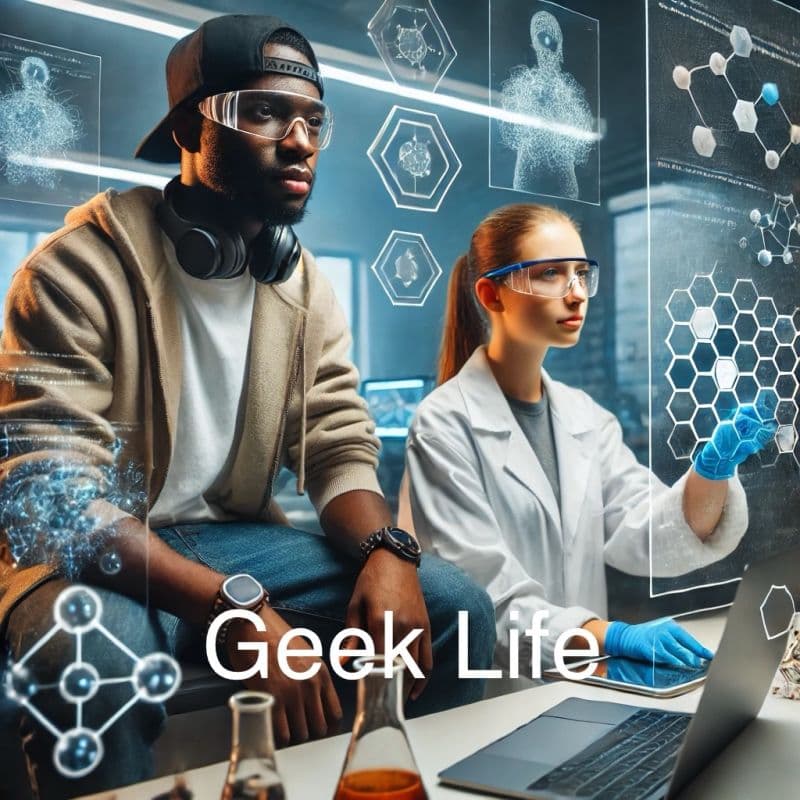
The best drug discovery teams in 2026 are two tribes trying to speak the same language.
The computational side — machine learning engineers, data scientists, platform builders — sees biology as a noisy prediction problem with frustratingly expensive labels. The biological side — chemists, pharmacologists, structural biologists — sees computation as a tool that either catches the mechanism or misses it entirely. Neither tribe is wrong. Neither tribe is enough on its own.
Bridging those two cultures is the single highest-leverage organizational design problem in AI drug discovery. More than any specific model. More than any specific platform. More than any specific dataset.
Here's why it's hard, and three concrete plays for doing it well.
Why this gap doesn't close by itself
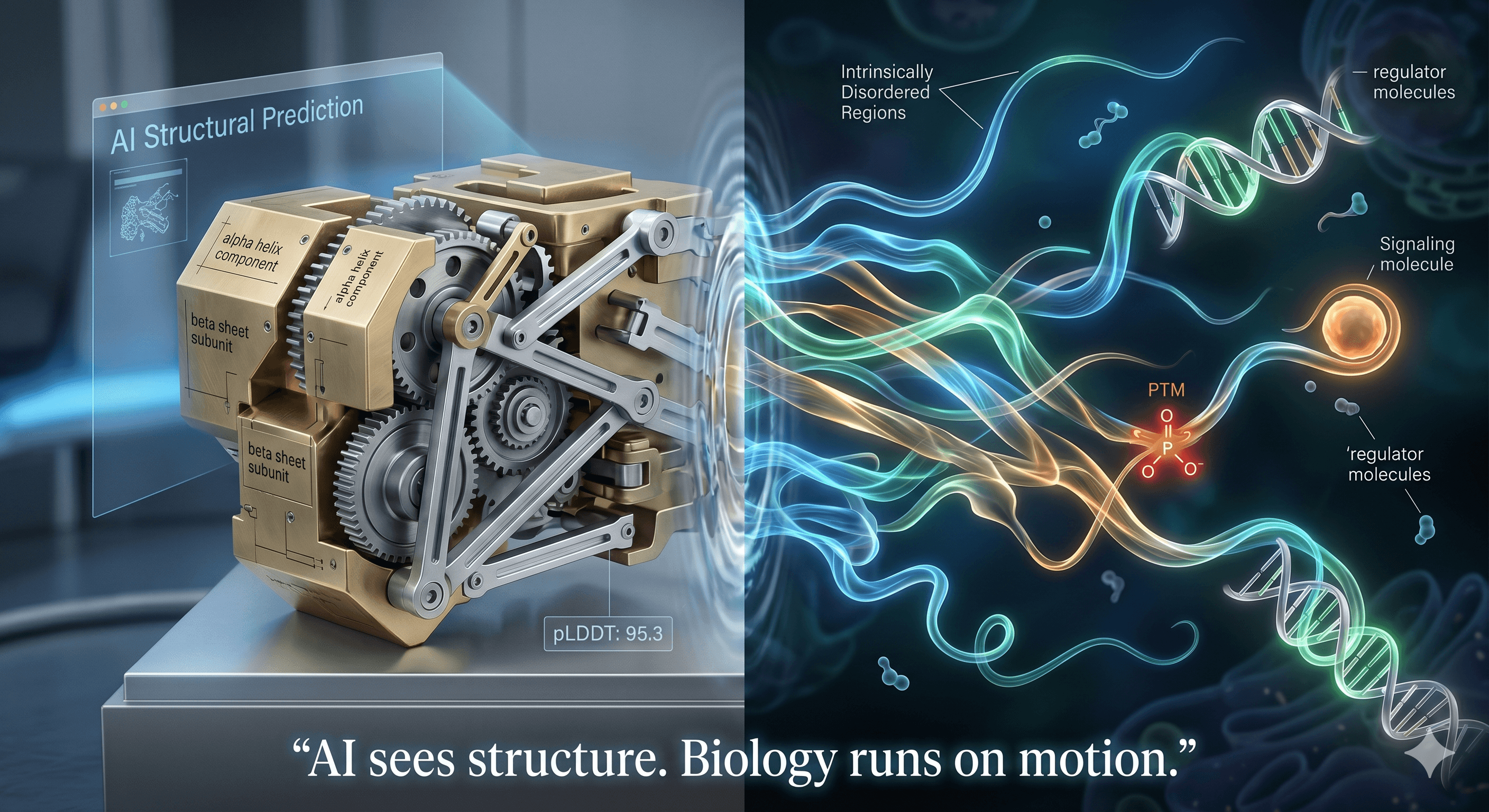
The talent pools don't overlap. Most AI engineers trained in computer vision or NLP have never run a pipette; most bench scientists with PhDs in pharmacology haven't written production Python. The incentive structures disagree — ML engineers are rewarded for shipping code weekly, biologists for publishing peer-reviewed papers annually. The vocabularies disagree — "F1 score," "loss curve," "attention head" sit on one side; "ADMET," "NAPQI," "IC50," "ipTM" sit on the other. Even the idea of what counts as "done" is different. To a model team, "the validation accuracy hit 0.92" is the finish line. To a pharmacology team, validation accuracy is the starting line — the question is whether that accuracy survives contact with a primary hepatocyte.
Without deliberate bridges, the two sides end up working in parallel but never in rhythm. That's the shape of most failed AI-first drug discovery programs.
Three plays that actually close the gap.
1. Cross-disciplinary collaboration hubs
The fastest way to get the two tribes speaking the same language is to put them in the same room, working the same problem, with explicit role-swap mandates.
Stand up AI/ML innovation labs — physical or virtual — where data scientists, software engineers, and biopharma researchers share a daily standup, a shared board, and a shared success metric tied to pipeline progress rather than to papers or PRs individually. When a bench scientist can watch the ML engineer retrain a model in response to a failed assay result, and the ML engineer can watch the bench scientist design the next experiment in response to the new predictions, you get the flywheel.
Run AI residency programs — structured rotations where ML experts are embedded for 3-to-6 months inside a discovery team. Not as consultants. As members with a seat at the bench. The residency format has already worked in the broader AI industry (Google Brain residents, OpenAI residents); it maps directly onto pharma where the domain depth required is enormous.
Layer on dual-mentorship pairs — an ML specialist teaches their scientist counterpart the principles of a foundation model; the scientist teaches the engineer why a binder's stereochemistry can make a ten-order-of-magnitude difference in binding affinity. Small-group, structured, weekly. Make it a career-development investment, not a volunteer extra.
2. Unified data and model-sharing platforms
Most organizations have no shortage of data — they have a shortage of connected data. The structured outputs of clinical trials live in one system. Omics data lives in another. Research papers and lab notebooks live in a third. Proprietary compound libraries live in a fourth. Each is individually valuable. Together, they're worth an order of magnitude more — if you can connect them.
Invest in centralized data lakes that ingest both structured data (clinical endpoints, multi-omics, assay results) and unstructured data (lab notebooks, internal reports, meeting transcripts, protocol documents). Getting the unstructured side in is the part most pharma data platforms skip. Don't skip it — 80% of the institutional knowledge in a drug discovery team lives in prose, not tables.
Adopt open-source AI models for drug discovery — OpenFold3, MoleculeNet, DeepChem, ESM — not because they're always the best, but because they're the substrate everyone can see and reason about together. Proprietary models trained on proprietary data can still be layered on top, but when the shared baseline is open, it becomes the lingua franca between tribes.
For data you can't share, adopt federated learning. Multiple pharma companies can train a joint model on combined data distributions without any of them sending raw data to the others. The model learns from everybody's experience; no one's crown jewels leave their environment. This is the realistic path for anything post-competitive — safety prediction, toxicity prediction, off-target effects.
3. AI-first experimentation frameworks
Once the teams are talking and the data is flowing, the experiments themselves have to be redesigned around AI being a first-class participant.
Build AI-driven hypothesis generation systems — not as a parlor trick but as a formal pipeline stage. Let models propose novel drug targets, novel protein-ligand pairs, novel mechanism hypotheses. Let chemists and biologists rank and triage those hypotheses with the same rigor they'd apply to internal literature review. The value isn't that the AI is always right; it's that the AI scales hypothesis generation from a human-limited rate to a compute-limited rate, and then the human expert rules on what to actually pursue.
Use digital twin technology to simulate biological pathways — the Pathway Layer I've written about before — and test AI predictions in silico before designing a wet-lab experiment. A virtual cell model that answers "what happens if we knock down this target?" within minutes is worth more than a model that answers with 5% higher accuracy but requires a six-week mouse study. Fast wrong answers unblock experiments; slow right answers don't.
Implement human-in-the-loop AI workflows where model outputs aren't final artifacts — they're starting points continuously refined by biologists and chemists. Every expert correction becomes training data. Every ML prediction that survives wet-lab validation becomes validation evidence. The loop is the product; the individual predictions are ephemeral.
What this looks like when it works
A bench scientist walks in at 9 AM. Overnight, an AI residency engineer has run a new binder design through OpenFold3 and produced 40 candidate structures ranked by predicted binding affinity. The scientist picks three to test. By lunch, she's sent compounds to synthesis; by Friday, she has assay results. Those results flow back into the shared data lake. Next week, the model retrains. Next month, the ranking is meaningfully better.
That's not a vision. That's an operating cadence. It's what a well-bridged team looks like. And it's radically different from the alternative — where an ML team ships a model to a storage bucket, a biologist eventually tries it once, and neither team learns anything structural from the failure.
Why this matters right now
The $200 billion patent cliff is arriving between now and 2030. AI drug discovery is accelerating. The teams that ship the first AI-discovered drugs won't be the ones with the fanciest models or the most data. They'll be the ones that figured out how to get their tech geeks and science geeks to operate as one unit — same vocabulary, same board, same scoreboard, same lunch table.
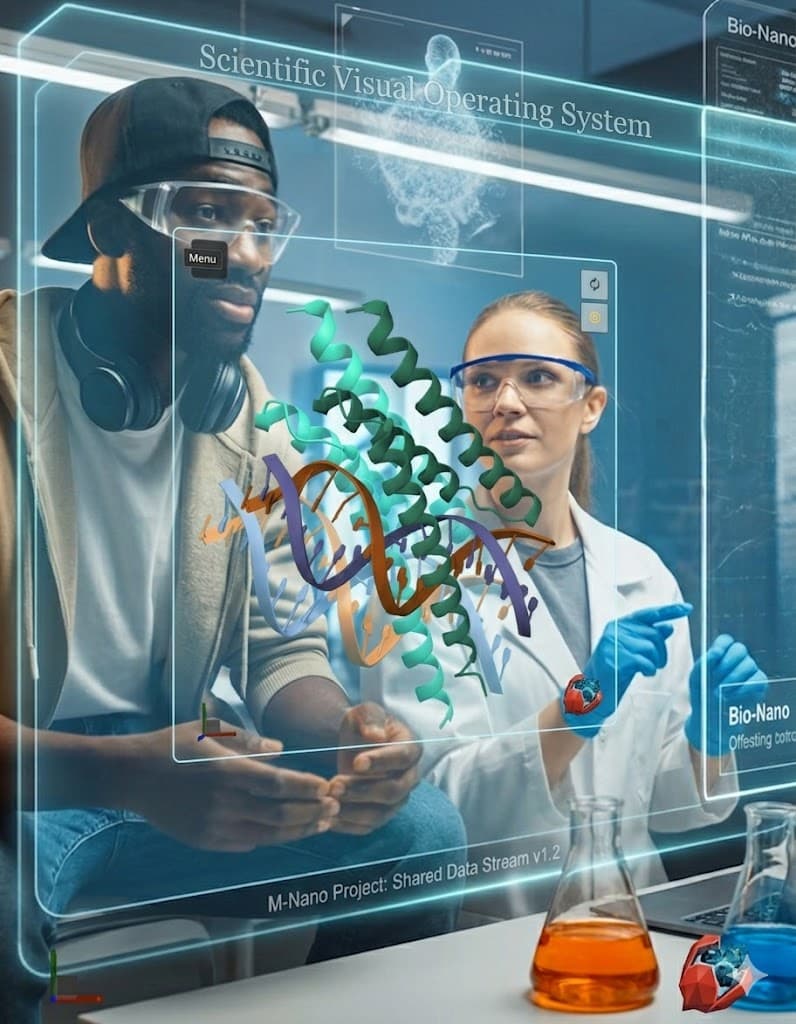
The Scientific Visual Operating System I've been writing about is, at its core, an interface thesis: the next decade's drug discovery happens when both tribes can see the same thing at the same time, in the same tool, with the same level of fluency. The molecular viewer I built on top of OpenFold3 is one tiny instance of that.
But the organizational version — that's the harder problem. And it's the one your competitors aren't solving yet.
#GeekLife
What I love most about this moment is that the distinction between "tech geek" and "science geek" is finally starting to collapse. The best ML engineers in pharma are reading Nature Chemistry on the weekend. The best medicinal chemists are running their own Colab notebooks. Being a polymath used to be rare and a little eccentric. Now it's table stakes. That's the #GeekLife — proud nerdery on both sides of the aisle, rewarded.
What are some other ways you've seen teams unite tech and science geeks? I want to hear them — reply, email, DM. The best plays don't come from org charts; they come from practitioners figuring out what actually works inside the belly of the beast.
Share this post