A reflection on the comic
The Journey to School
By Sheldon Barnes · November 18, 2026
A school bus. A pencil. A sheet of paper. These are small things until a child cannot count on them.
In the United States, many of us send our children off to school with a quick goodbye. We expect the bus to come. We expect a classroom to be waiting. We expect them to return with a drawing, a story, or a project that has taken over the kitchen table. Those ordinary moments are a kind of wealth. I do not think we always recognize it.
While writing Peace in the Middle East and imagining its comic adaptation, I kept thinking about the children of Gaza. I thought about their talent, curiosity, humor, and all they could give to the world if they had the safety and space to grow. The loss of an ordinary school day is not only a loss of lessons. It is a loss of routine, friendships, discovery, and the freedom to imagine what comes next.
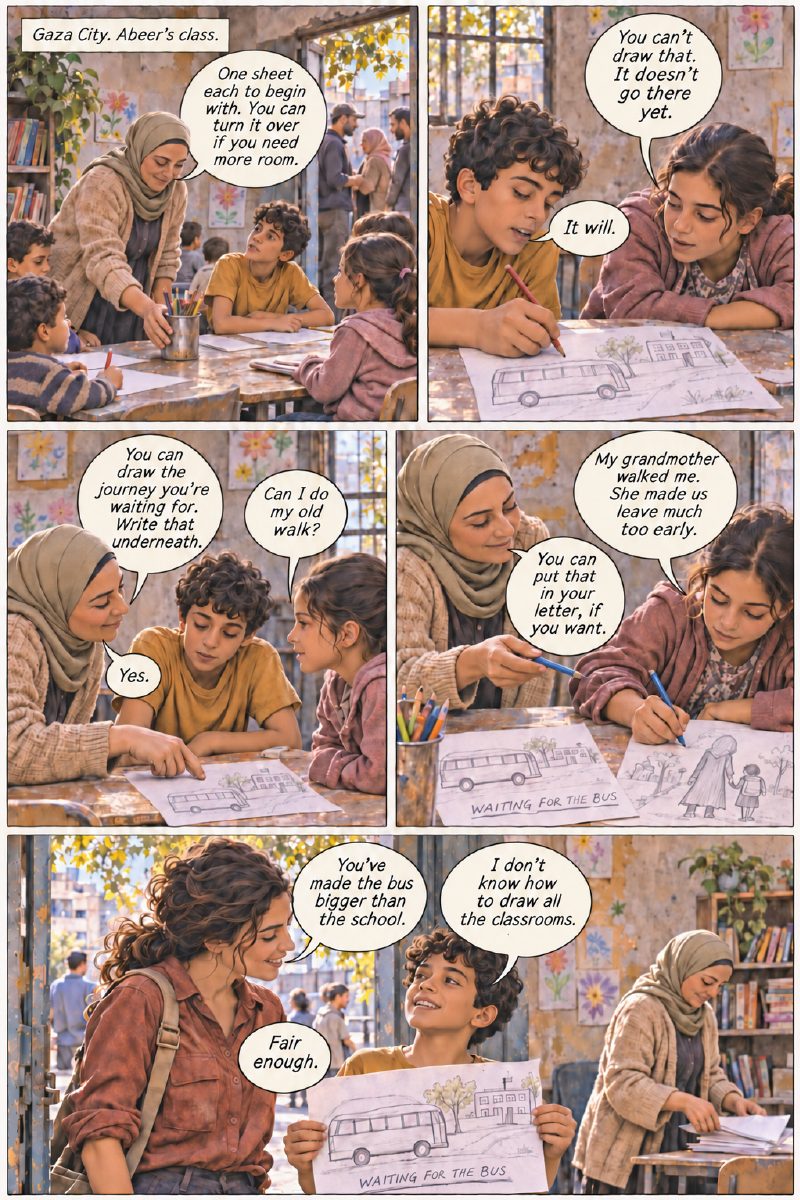
That is why the comic follows Sami, a boy waiting for his route to school to be restored. He draws a bus outside the school before the bus can actually get there. A classmate tells him he cannot draw it because it does not go there yet. “It will,” he says. His teacher lets him draw the journey he is waiting for.
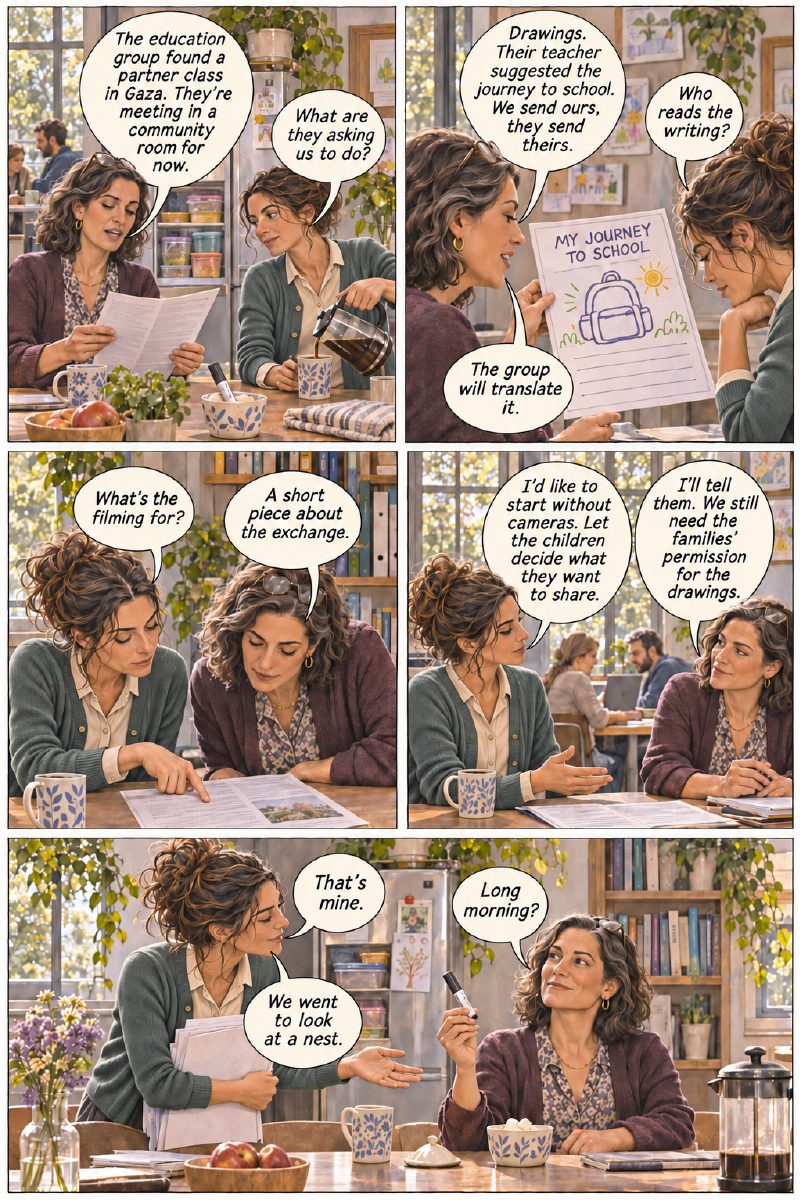
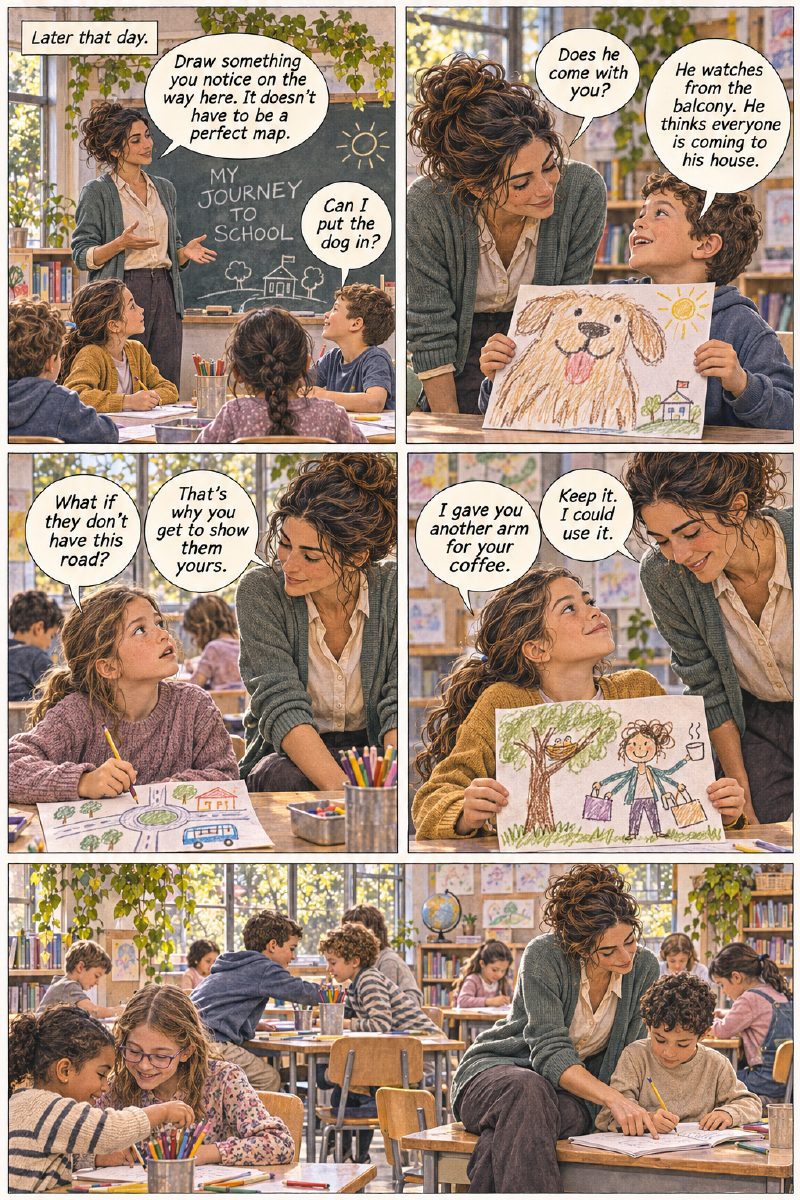
Across the border, another class draws its own journeys to school. The children notice a dog on a balcony, a tree with a nest, a road and a bus. Their drawings are meant to be shared between classrooms. It is an exchange, not a competition: no child has to prove that their journey matters more. Each child simply gets to show another what the world looks like from where they stand.
I know a drawing cannot repair a road, reopen a school, or keep a child safe. The story does not pretend otherwise. Layla and her neighbors still have to face damaged streets, uncertain records, and the hard work of rebuilding. But I wanted the comic to hold open a vision of what that work is for: a child arriving safely, finding a seat, and being asked to make something of their own.
Peace should be measured in those moments, too. If these pages help even one reader see the children of Gaza as children with gifts and futures, and feel a stronger responsibility to make room for that future, then this imagined school journey has done something worthwhile. Every child deserves the chance to take that journey in real life.
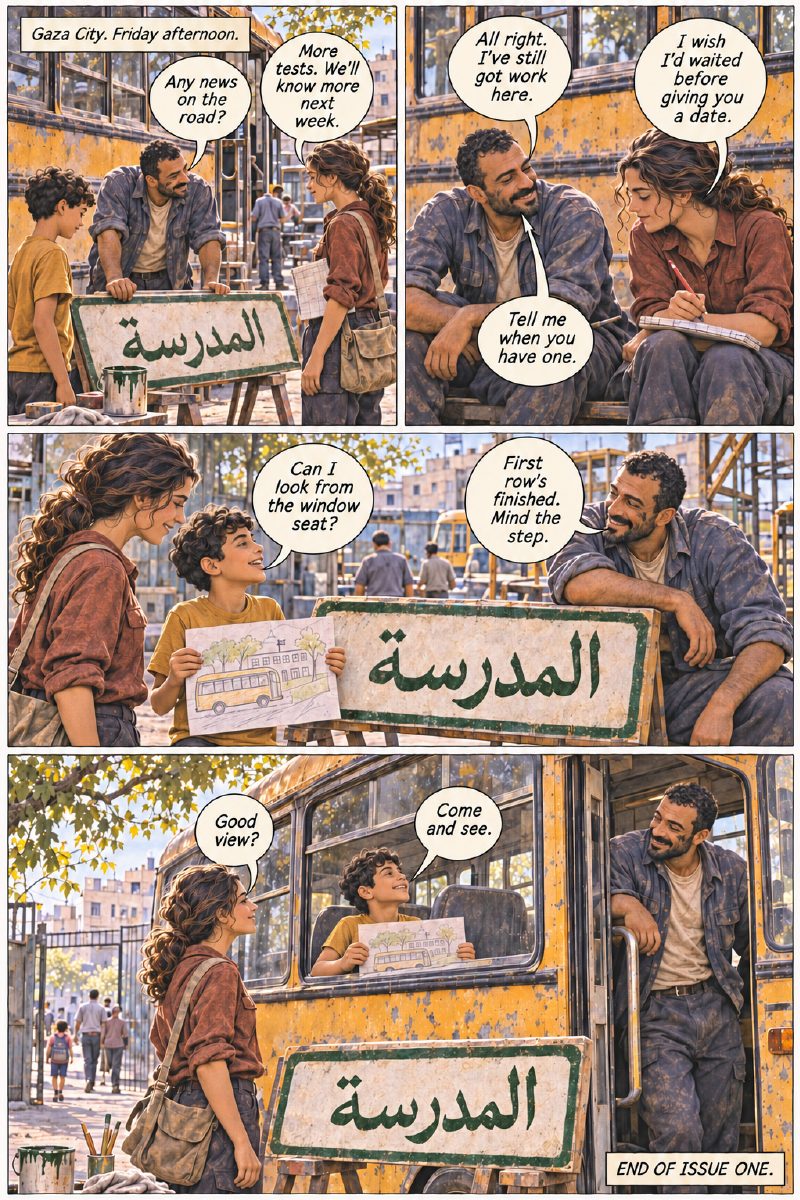
These scenes are fictional. They express a hope for safe schooling and a lasting peace; they do not depict a school route operating in Gaza today.
From the comic adaptation of Peace in the Middle East by Sheldon Barnes.