AMD in the AI Era: A Strategy for the Original Underdog
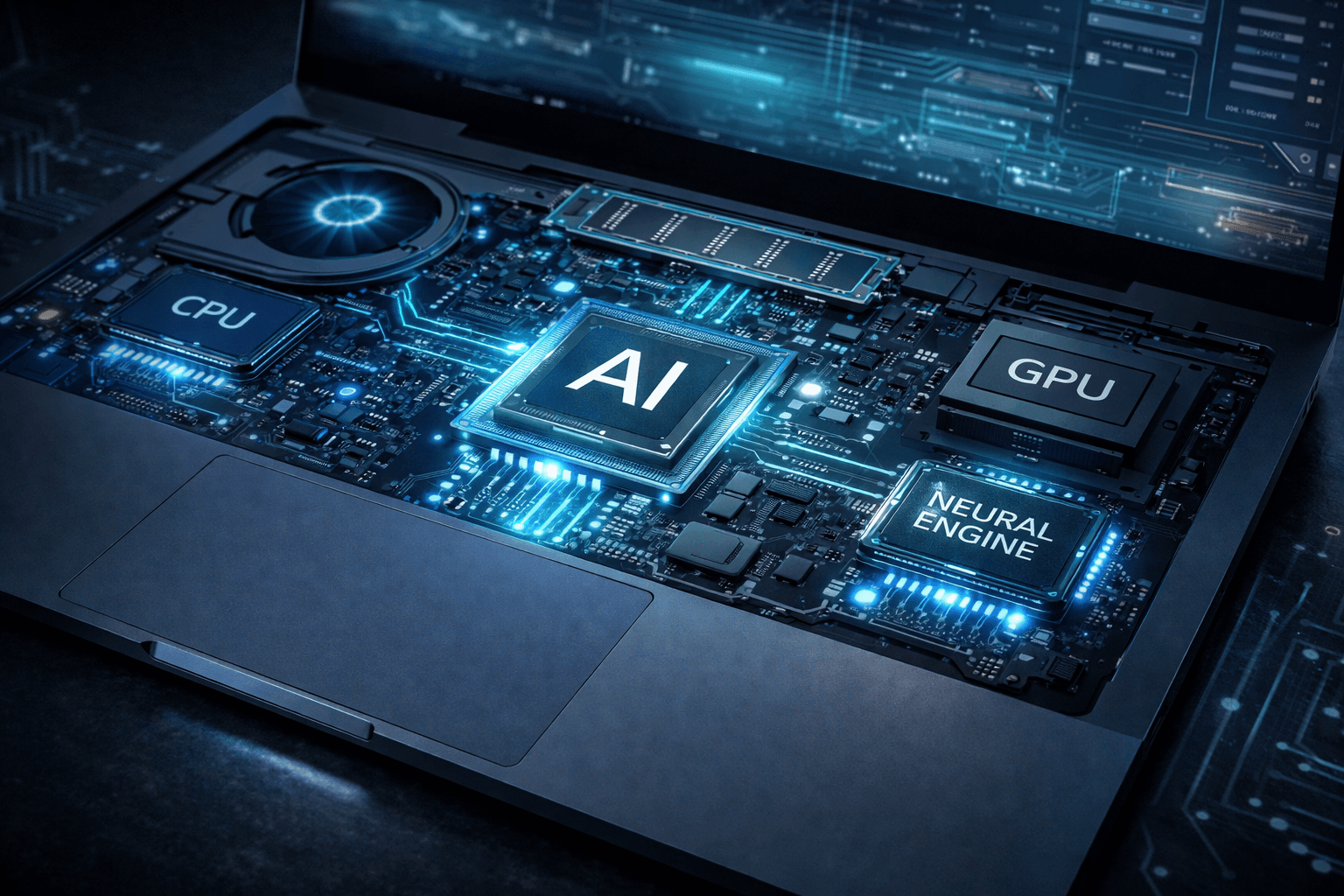
If you grew up bending computers to your will in the '90s and 2000s, you probably had a love affair with AMD. They were the alternative. Their CPUs ran hot but ran fast. Their Athlons and FX processors let you build a screaming gaming rig for less than the price of a comparable Intel setup. Later they acquired ATI and gave us Radeon — graphics cards that punched above their price tag, taking real shots at Nvidia's GeForce.
If you had told me back then that Nvidia — not Intel, not AMD — would lead the most important compute revolution of our lifetimes, I would not have believed you.
But here we are. Nvidia's market cap is bigger than the next two combined. CUDA is the de facto language of AI. Even Elon Musk is teaming up with Intel to build chip factories — explicitly betting on a non-Nvidia supply chain.
So where does AMD go from here?
How AMD lost the AI moment
It wasn't the silicon. AMD's MI300X / MI325X / MI350 series compete with Nvidia's H100 / H200 / B200 on raw memory bandwidth and FLOPs — often at lower price.
It was the software. While AMD invested in fab partnerships and chiplet architectures, Nvidia spent fifteen years building CUDA — a developer tool, a compiler, a community, a moat. By the time AMD took ROCm seriously, every PhD student in machine learning had already shipped their thesis on CUDA.
The lesson: Hardware is what you sell. Software is what you keep.
The strategy
Five moves I'd make if I were running AMD right now.
1. Win the inference market, not training
Nvidia owns training. Training requires the absolute best — and the people doing it have unlimited budgets and CUDA muscle memory. Don't fight there.
Inference is different. It's price-sensitive, latency-sensitive, and increasingly fragmented. As foundation models stabilize and the workload shifts from training to serving billions of inference calls a day, the margin pressure on Nvidia GPUs becomes untenable. AMD's MI300X already wins on inference TCO for many workloads — make this the headline story.
2. Make ROCm frictionless, not "competitive"
"Competitive with CUDA" is a losing frame. The frame has to be: port your CUDA workload to ROCm in one command and lose nothing. A real, painless, validated migration tool — not a transpiler that breaks on the third unsupported kernel.
If you can't beat the moat, build a tunnel under it.
3. Lean into open ecosystems
PyTorch, MLIR, Triton, vLLM — every one of these is an opportunity to make AMD a first-class target. Don't fork. Contribute. Become the Linux of AI compute: the option enterprises pick when they don't want one company's roadmap dictating their stack.
This isn't charity. Open ecosystems shrink Nvidia's lock-in faster than any AMD product launch ever could.
4. Sell systems, not GPUs
AMD is the only company that owns the whole stack: server CPU (EPYC), client CPU (Ryzen), GPU (Instinct + Radeon), FPGA (Xilinx), DPU (Pensando). Nvidia has Grace + Blackwell + ConnectX. Intel is fragmented.
Stop selling GPUs and start selling AI factories — pre-validated rack-scale systems where the CPU, GPU, network, and accelerator are co-designed. Hyperscalers like Microsoft and Meta are already buying MI300X to diversify from Nvidia. Make the diversification trivial.
5. Be the second source the world is begging for
Geopolitically, every government and every hyperscaler wants a credible non-Nvidia option. China can't buy Nvidia's best. Europe wants sovereign AI. Microsoft, Google, Meta, and Amazon all hate single-vendor exposure on a multi-billion-dollar cost line.
AMD doesn't need to beat Nvidia to win. AMD needs to be the only credible second source — and price accordingly.
What it would take
This isn't a strategy any incumbent finds easy. It requires:
- Hiring software people the way Nvidia did fifteen years ago — and giving them real organizational power inside a hardware company
- Being patient enough to invest in developer experience that won't pay off for three to five years
- Resisting the urge to chase training market share and instead winning the unsexy inference battle
- Acquiring or partnering aggressively for the software stack — anything that compresses the gap
The underdog window
I've been wrong about AMD before. In 2017 they were dead. Lisa Su rebuilt them with the Zen architecture and they took a third of the server CPU market from Intel.
The same window exists now in AI. Nvidia's gross margins are unsustainable. Their software lock-in is deep but not infinite. The market wants a second source.
If you grew up watching AMD chase Intel, this is the third act. The underdog has done it before.
Share this post